Why Gambling Billboards Cluster In Poor Neighborhoods
Why do lottery billboards flood low‑income blocks while suburbs see wealth advisors? We trace the money, the data, and the history that make hope a business model. Listen now and tell us what you see on your streets—what ads dominate your neighborhood?
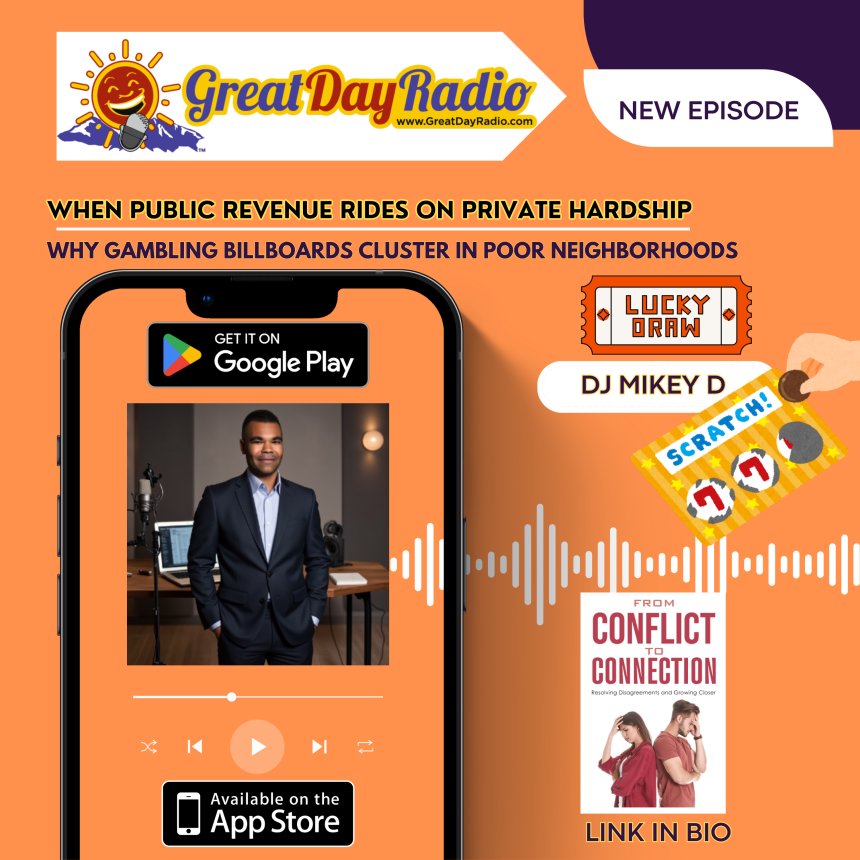
Why do lottery billboards flood low‑income blocks while suburbs see wealth advisors? We trace the money, the data, and the history that make hope a business model. Listen now and tell us what you see on your streets—what ads dominate your neighborhood? Bold claim: state lotteries profit most where people have least. We unpack targeting, algorithms, and the real social costs behind “fun” tickets. Hit play, share with a friend, and weigh in—should public ads be limited in vulnerable areas? If luck is the plan, who built the plan? From redlining to ad tech, we reveal why gambling promos cluster in Black and Latino neighborhoods. Stream the episode, then drop your zip code—what ads shape daily life where you live?
Lottery advertising does not blanket every neighborhood equally. Walk the main streets of many Black and Latino urban corridors and you will see a thicket of scratch-off posters, jackpot billboards, bus wraps, and window clings promising instant escape. Drive a few miles to a wealthier suburb and the visual field flips to wealth managers, college savings, real estate, and boutique retail. That contrast is not random noise in the media ecosystem; it is the output of business incentives, historical segregation, and data tools working in tandem. Understanding why those messages cluster where they do is the first step toward designing fairer policy and healthier local economies.
Marketers defend concentration with a familiar line: place ads where return on investment is highest. Lottery agencies study per‑capita sales, repeat purchase rates, and store foot traffic, then saturate the blocks that buy most. On a balance sheet, that looks efficient. Ethically, it is fraught. Lower‑income households spend a higher share of income on tickets, so every additional impression leans on people with the thinnest margins. The result is a regressive revenue stream disguised as entertainment. Because state lotteries often fund public services, the moral stakes rise further—government extracts dollars disproportionately from communities with the least slack to fund programs that may or may not return value to those same neighborhoods.
To see how we got here, follow the map. Decades of redlining, discriminatory lending, unequal school funding, and zoning decisions concentrated poverty and separated opportunity from many Black and brown communities. Advertising rarely swims against those currents; it rides them. Geodemographic segmentation, loyalty data, and programmatic ad tools optimize toward past behavior. Even when race is excluded explicitly, proxies such as income, store density, and purchase history reproduce racialized patterns. Algorithms chase yield, not justice, so the same streets become overexposed to gambling pitches while being underserved by messages about asset building, job training, and small business support.
This saturation shapes culture as well as wallets. When every block repeats the mantra that a ticket is a path out, hope becomes transactional and statistical rather than collective and structural. That narrative crowds out belief in slower, sturdier paths like education, entrepreneurship, and fair wages. It also deepens harm where stress is already high: problem gambling, debt, and the anxiety of near‑miss hope accumulate in places grappling with housing instability, unemployment, and health disparities. Add the role of local retail—corner stores often depend on lottery revenue and welcome promotions—and you get a feedback loop: more sales justify more ads, which drive more sales.
There are better choices. Transparency should come first: states can publish granular ad placement data, purchase patterns, and equity audits so the public can see where messages land and who pays. Policymakers can set guardrails similar to tobacco and alcohol: limits near schools and social services, caps in high‑poverty tracts, and curbs on hyper‑targeted digital campaigns. If states insist on lotteries, earmarking revenue with strict accountability for the most impacted neighborhoods—affordable housing, school quality, workforce ladders, and community‑owned enterprises—can shift value back. Auditing algorithms for proxy discrimination can slow the automated drift toward inequity. Most importantly, investment in real opportunity—banking access, small business capital, childcare, apprenticeships, and financial education—changes the demand side. When people have reliable paths to stability, luck loses its marketing power.
The core question is not whether some people enjoy a flutter; many do, and a few win. The question is scale and context. When a public agency and its vendors flood vulnerable places with messages that normalize frequent play, they convert hardship into revenue and call it voluntary. A just city refuses that trade. Build systems that make security ordinary and aspiration practical, and the skyline of ads will change on its own.
Buzzsprout - Let's get your podcast launched!
Start for FREE
Best e-commerce platform ever!
You can literally build a fully functioning store in less than 5 minutes.
Battery Daddy Storage & Organizer Case
Battery Daddy Storage & Organizer Case with Tester, Stores & Protects Up to 180 Batteries
From Conflict to Connection
Unlock the power of understanding and empathy with "From Conflict to Connection," the transformative
Realistic Voice AI platform Ever
AI voice models and products powering millions of developers, creators, and enterprises.
The Best Financial Hack Ever!
Discover The Fundamental Principles Of Living Trusts, Including The Differences Between Revocable An
Disclaimer: This post contains affiliate links. If you make a purchase, I may receive a commission at no extra cost to you.
Great Day Radio Sources:
Share
What's Your Reaction?
 Like
0
Like
0
 Dislike
0
Dislike
0
 Love
0
Love
0
 Funny
0
Funny
0
 Angry
0
Angry
0
 Sad
0
Sad
0
 Wow
0
Wow
0